


Container Standards
ISO containers follow globally recognized standards for external dimensions, corner castings, handling, stacking, transport compatibility and intermodal operations.
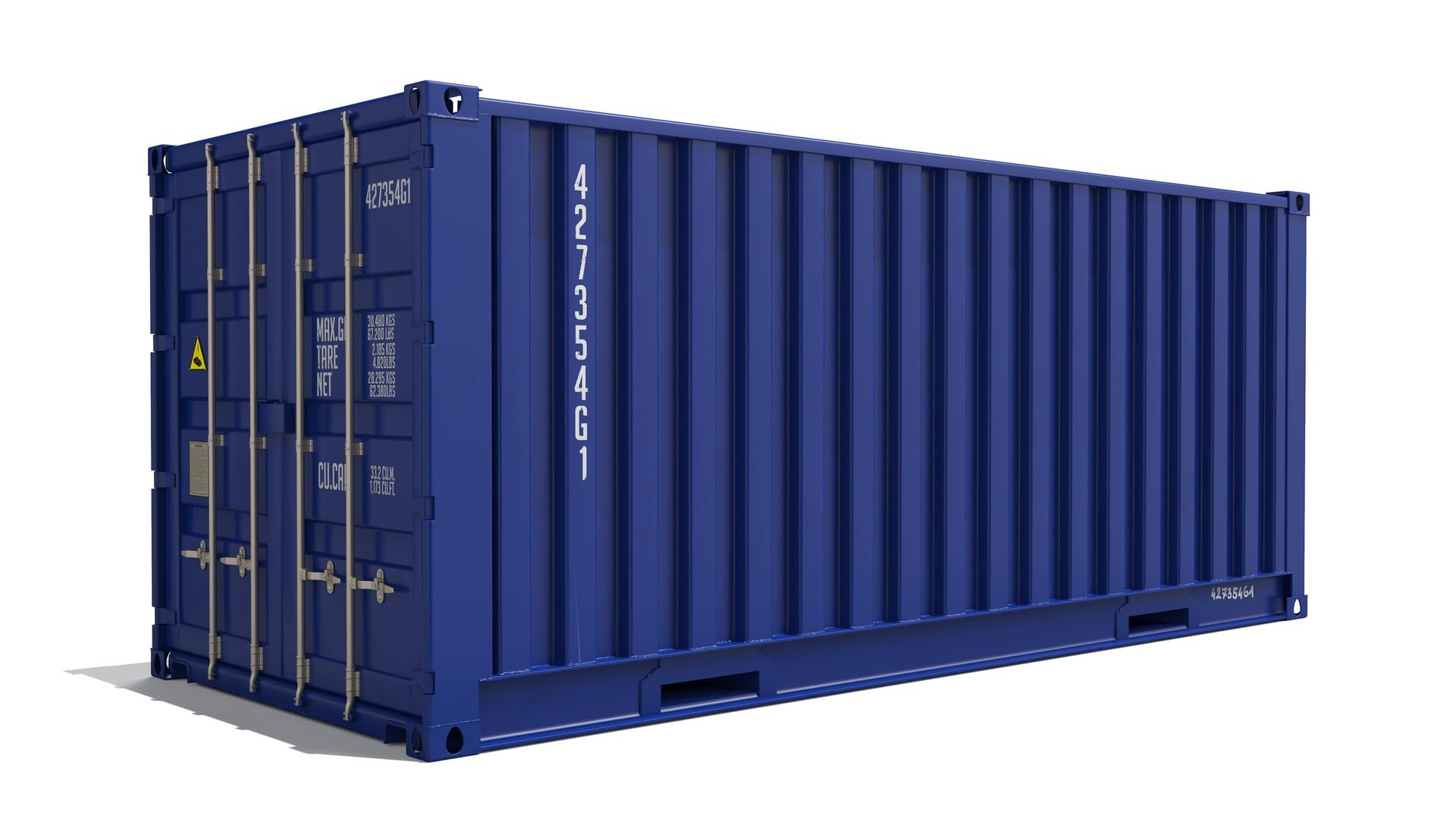
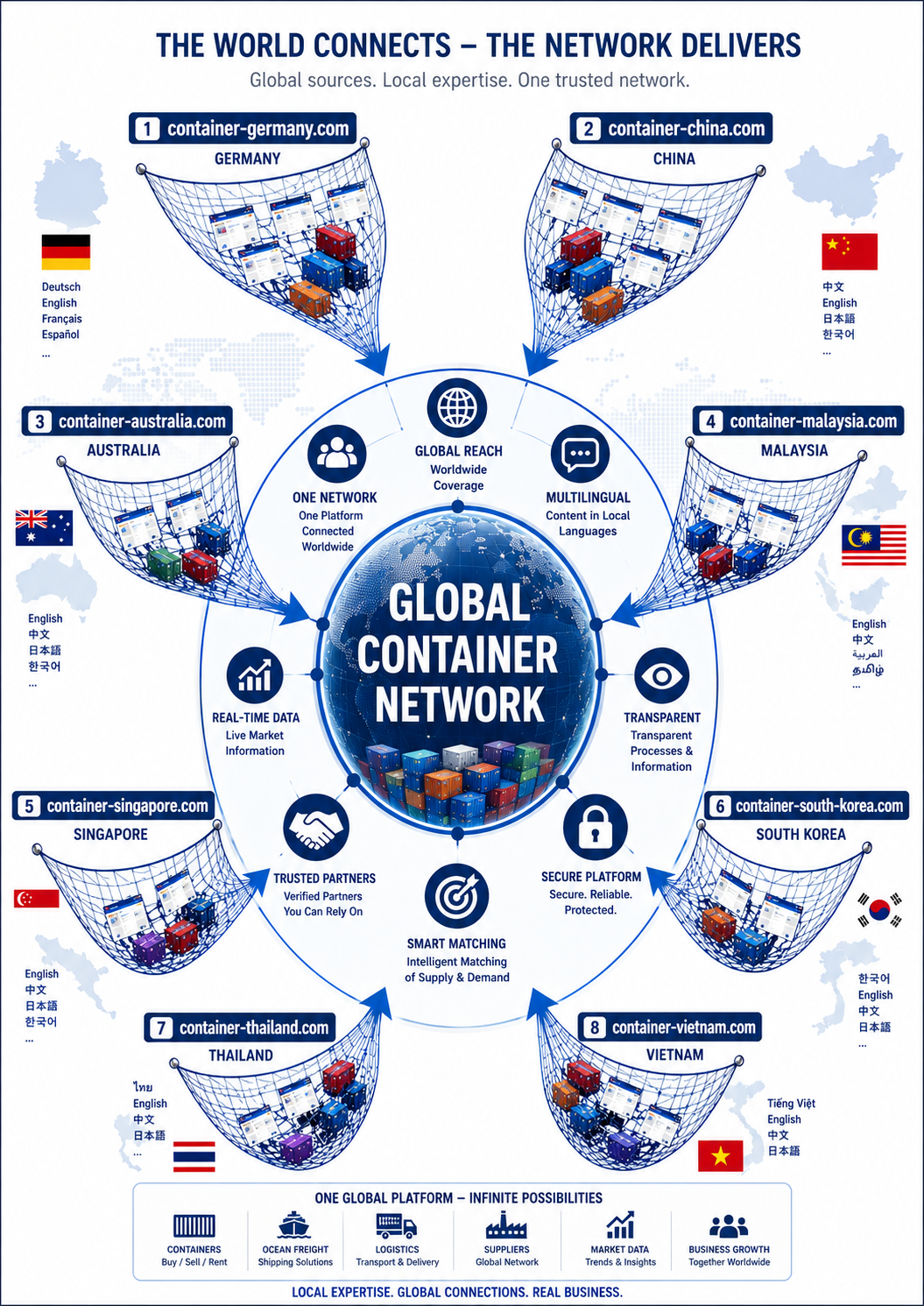

The Global Container Knowledge Center provides structured business information about ISO shipping containers, container types, dimensions, weights, inspection standards, certification, logistics processes and international container market requirements.
This page is designed for companies, procurement teams, logistics managers, freight forwarders, exporters, importers, project cargo specialists and international organizations that need reliable container knowledge before buying, selling, leasing, inspecting or transporting containers worldwide.
Shipping containers are standardized transport units used across ocean freight, rail freight, road transport, inland logistics, project cargo, storage, construction, mining, energy, humanitarian operations and industrial supply chains. Their value is not limited to physical steel construction. In professional B2B trade, containers are commercial assets, transport equipment, storage infrastructure and logistics instruments at the same time.
A reliable container decision requires more than choosing between a 20-foot or 40-foot unit. Buyers, sellers, leasing companies, freight forwarders and industrial customers must understand container dimensions, payload, tare weight, cubic capacity, structural condition, CSC validity, container grade, door condition, floor quality, corrosion level, repair status, depot location, transport availability and intended use.
Global Container Network structures this knowledge for international business users who need practical, commercially relevant and technically accurate container information for worldwide container sourcing, trading, leasing and logistics coordination.
ISO containers follow globally recognized standards for external dimensions, corner castings, handling, stacking, transport compatibility and intermodal operations.
Containers are used for cargo movement, storage, resale, leasing, fleet operations, industrial projects, emergency logistics and international supply chain management.
Professional container decisions depend on equipment type, location, technical condition, documentation, availability, pricing, transport cost and operational suitability.
An ISO shipping container is a standardized freight unit designed for international cargo movement by sea, rail and road. The main purpose of this standardization is simple: a container loaded at one location can be handled by cranes, trucks, trains, vessels and container depots across the world without changing the cargo unit itself.
In global B2B logistics, the container is not only a transport box. It is a commercial asset, a logistics interface and a standardized trade instrument. A container can be purchased, leased, repositioned, stored, inspected, repaired, certified and traded internationally.
The most common ISO containers are 20-foot and 40-foot dry freight containers. However, global container logistics also includes high cube containers, open top containers, flat racks, platform containers, refrigerated containers, tank containers, side door containers, double door containers and specialized units for project cargo, offshore use and industrial applications.
ISO containers are built around globally recognized external dimensions and corner fittings, allowing international compatibility across vessels, terminals, trucks, trains and lifting equipment.
The same container can move through ocean freight, rail freight, road transport and depot handling without unloading the cargo between transport modes.
Containers can be used for cargo transport, temporary storage, long-term storage, resale, leasing, modified structures, industrial projects and global supply chain operations.
Different cargo flows require different container types. A professional container decision should always match the cargo, loading method, route, handling requirements, temperature requirements and regulatory situation. In B2B procurement, the wrong container type can create unnecessary transport costs, cargo risk and operational delays.
| Container Type | Professional Use | Typical B2B Application |
|---|---|---|
| Dry Container | General cargo, packed goods, machinery, retail products | Import, export, storage, trading, industrial logistics |
| High Cube Container | Higher internal volume and additional vertical clearance | Light but voluminous cargo, furniture, equipment, modifications |
| Open Top Container | Cargo loaded from above by crane | Machinery, oversized cargo, construction equipment |
| Flat Rack Container | Heavy, wide or irregular cargo | Project cargo, vehicles, industrial plants, steel structures |
| Reefer Container | Temperature-controlled cargo | Food, pharmaceuticals, chemicals, cold-chain logistics |
| Tank Container | Liquids, gases and bulk liquid cargo | Chemical logistics, food-grade liquids, industrial liquids |
Container dimensions are one of the most important decision factors in professional container procurement. The external size determines transport compatibility and handling, while the internal dimensions define the usable cargo space. In practice, the exact measurements may vary slightly depending on manufacturer, production year and container design.
| Container Size | External Length | External Width | External Height | Typical Use |
|---|---|---|---|---|
| 20 ft Standard | Approx. 6.06 m | Approx. 2.44 m | Approx. 2.59 m | Heavy cargo, dense goods, storage, export cargo |
| 40 ft Standard | Approx. 12.19 m | Approx. 2.44 m | Approx. 2.59 m | General cargo, export shipments, storage, resale |
| 40 ft High Cube | Approx. 12.19 m | Approx. 2.44 m | Approx. 2.90 m | High-volume cargo, furniture, modified containers |
| 45 ft High Cube | Approx. 13.72 m | Approx. 2.44 m | Approx. 2.90 m | Large-volume logistics, European transport, special projects |
Note: Container dimensions are approximate business reference values. Exact dimensions should always be checked against the specific container data plate, manufacturer documentation or depot inspection report.
Weight specifications are among the most important technical characteristics of every ISO shipping container. Incorrect weight calculations may lead to loading restrictions, transport delays, higher freight costs, safety issues and regulatory violations. Professional container procurement therefore always considers tare weight, payload capacity and maximum gross weight before equipment selection.
International carriers, shipping lines, port terminals and freight forwarders rely on standardized weight information for vessel planning, cargo stowage, crane operations and intermodal transport. Understanding these values is essential for efficient logistics planning.
| Term | Meaning | Business Importance |
|---|---|---|
| Tare Weight | Weight of the empty container. | Determines available loading capacity. |
| Payload | Maximum permitted cargo weight. | Critical for freight planning and legal compliance. |
| Maximum Gross Weight | Container plus cargo. | Maximum allowable transport weight. |
| Cubic Capacity | Internal loading volume. | Important for lightweight and high-volume cargo. |
The technical condition of a shipping container has a direct impact on operational safety, resale value, maintenance costs and long-term usability. Professional buyers evaluate considerably more than external appearance.
Floor integrity, door sealing performance, structural strength, corrosion, roof condition, side wall deformation, corner casting geometry and CSC validity are among the most important evaluation criteria during container inspection.
Newly manufactured containers with no commercial operating history. Often referred to as "One Trip Containers" after the initial positioning voyage.
Equipment transported once from the manufacturing country to the destination market. Excellent condition with minimal wear.
Suitable for international cargo transport. Meets applicable structural and safety requirements after inspection.
Suitable for secure storage. Doors, roof and walls protect against weather penetration.
Equipment sold without refurbishment. Repairs or maintenance may be required before operational use.
Previously used container that has undergone professional inspection, repair and quality improvements.
Professional inspection reduces commercial risk and increases investment security. Buyers should verify both structural integrity and operational suitability before purchasing or leasing shipping containers.
Roof, side panels, doors, corner posts, welds, corrosion and structural deformation.
Floor condition, moisture, contamination, odors, previous cargo residues and cleanliness.
Hinges, locking bars, handles, seals, opening and closing performance.
Verification of valid CSC certification, identification markings and inspection history.
Owner code, serial number, ISO size code, operational markings and equipment identification.
Evaluation of the container's suitability for export, storage, leasing, resale or modification.
CSC certification is one of the most important safety requirements in international container logistics. The CSC plate confirms that a container has been approved under the Convention for Safe Containers and is suitable for international transport when it remains structurally safe and properly maintained.
For professional buyers, leasing companies, freight forwarders and cargo owners, CSC validity is a central decision factor. A container without valid CSC status may still be useful for static storage, but it may not be accepted for international cargo movement by shipping lines, terminals or intermodal operators.
The CSC plate indicates that the container was approved for safe handling, lifting, stacking and transport according to international safety requirements.
The inspection date or ACEP marking helps determine whether the container remains valid for international transport operations.
Shipping lines, ports and depots may reject containers that are structurally unsafe, expired or missing required certification information.
Valid CSC status can increase resale value and operational usability, especially for cargo-worthy containers used in international trade.
ISO 6346 is the international identification system used for freight containers. It defines how containers are marked with an owner code, equipment category identifier, serial number and check digit. This identification structure allows containers to be tracked, verified and documented across global transport chains.
A standard container number usually consists of four letters followed by seven digits. The first three letters identify the owner or operator, the fourth letter identifies the equipment category, six digits form the serial number and the final digit is the check digit.
| Element | Example | Meaning |
|---|---|---|
| Owner Code | GCN | Identifies the container owner or registered operator. |
| Category Identifier | U | Indicates freight container equipment. |
| Serial Number | 123456 | Unique numerical container identification. |
| Check Digit | 7 | Used to validate the container number mathematically. |
Container markings provide essential information for transport operators, terminals, depots, customs processes, leasing companies and cargo owners. These markings help identify the container, determine its size and type, verify weight limits and support safe handling during international logistics operations.
The container number is the primary identification code used for tracking, documentation, release orders, depot records and transport coordination.
This code indicates the container length, height and equipment type, such as standard dry container, high cube or specialized container.
The maximum gross weight shows the permitted total weight of the container including cargo and is critical for safety and legal compliance.
Tare weight identifies the empty weight of the container and is required to calculate available payload capacity correctly.
Payload capacity defines the permitted cargo weight and must be checked before loading heavy goods or dense industrial cargo.
The CSC plate contains approval, inspection and safety information required for international container movement.
Container knowledge becomes commercially valuable when it is applied to real logistics decisions. Companies sourcing containers internationally must consider not only purchase price, but also depot location, transport costs, port access, availability, customs requirements, inspection status, documentation and final destination.
The same container can have different business value depending on its location. A cargo-worthy 40 ft high cube container in a major export hub can be more valuable than a similar unit in a low-demand inland depot, because repositioning costs and regional demand strongly influence the final commercial result.
Container availability depends on local inventory, regional trade flows, depot capacity and the balance between import and export demand.
Moving empty containers between regions can significantly affect total cost and should be included in professional procurement calculations.
Ports with strong vessel schedules, rail connections and inland transport networks often offer better container trading and logistics conditions.
Container release, ownership transfer, leasing agreements, inspection reports and transport documents must be coordinated professionally.
A shipping container moves through several commercial stages during its operational life. It may begin as newly manufactured equipment, enter international cargo service, move into leasing fleets, be sold as used equipment, repaired, refurbished, converted or finally used for static storage and industrial applications.
Containers are produced according to international standards with steel structure, corner castings, flooring, doors, locking bars and protective coating systems.
After production, containers enter global trade routes and are used by shipping lines, leasing companies, freight forwarders and cargo owners.
Regular inspection, structural repair, floor repair, door adjustment and corrosion treatment help extend the commercial service life of container equipment.
Used containers may be resold, refurbished, leased, modified for storage, converted for industrial use or integrated into project-based logistics solutions.
Professional container maintenance protects asset value and operational reliability. Even strong steel containers require regular checks because transport, stacking, weather, handling and cargo residues can affect structural condition and usability.
Roof dents, holes and corrosion can create water ingress risk and should be checked before storage or cargo use.
Container floors must be inspected for moisture, cracks, contamination, weak sections and forklift damage.
Door gaskets, hinges, locking bars and handles must work properly to keep cargo protected and operations safe.
Surface rust can be treated, but deep corrosion near structural areas requires careful technical assessment.
Empty container repositioning is a major cost factor in global container logistics. A container may be available at an attractive purchase price, but if it is located far away from the intended use area, inland transport, depot charges and handling costs can change the real business calculation.
Professional container sourcing therefore evaluates price, condition and location together. The best commercial decision is not always the cheapest container, but the container with the best total cost, suitable condition and reliable availability at the required location.
A cargo-worthy container is suitable for international cargo transport after inspection and must meet relevant structural and safety requirements.
CSC refers to the Convention for Safe Containers. The CSC plate confirms safety approval and inspection information for international transport use.
A one-trip container is newly manufactured equipment that has usually completed only one transport movement from the production country to the destination market.
The most common international container sizes are 20 ft standard, 40 ft standard and 40 ft high cube containers.
Tare weight is the empty weight of the container. It is used to calculate the remaining permitted cargo payload.
Payload is the maximum permitted cargo weight that can be loaded into the container under its technical and regulatory limits.
Used containers can be exported if they are structurally suitable, properly documented and accepted by the relevant carrier, depot or shipping line.
Container prices are influenced by condition, size, location, availability, transport cost, market demand, leasing activity and regional trade flows.
Learn more about dry containers, high cube containers, reefers, flat racks, open tops and specialized container equipment.
Compare standard container sizes, external dimensions, internal loading space, cubic capacity and practical cargo suitability.
Understand container availability, price trends, leasing demand, regional supply and global trade effects.
Explore port handling, depot operations, inland transport, intermodal movement and international freight coordination.
Global Container Network supports international B2B communication for container sourcing, container trading, leasing, logistics coordination, supplier matching and professional container market information.
Contact Global Container Network
© GlobalContainerNetwork.com